The feels like temperature, or apparent temperature, is how hot or cold the air feels to your body once humidity and wind are taken into account. The Bureau of Meteorology calculates it from air temperature, water vapour in the air and wind speed: humid air pushes it above the real temperature, and wind pulls it below. That is why 33 °C in humid Darwin can feel like 38 °C, while a dry 38 °C in Perth feels closer to 35 °C.
- Feels like = air temperature adjusted for humidity and wind, using the Bureau's apparent temperature formula.
- Humidity raises it because sweat can't evaporate; wind lowers it by carrying heat away.
- Dew point is the best guide to stickiness: above about 18 °C most people find it oppressive.
- Heat index is the American version and uses only temperature and humidity, in the shade.
- Our forecast pages show the feels like temperature for now and for every hour of the next 48 hours.
Most weather apps show two numbers: the temperature and a "feels like" figure beside it. On a muggy February afternoon in Brisbane they can be four or five degrees apart, and the second one is usually the one your body agrees with. Here is where that number comes from and how to use it.
What does feels like temperature mean?
The feels like temperature is an estimate of how hot or cold the conditions feel to a person, given in degrees so you can compare it directly with the thermometer. Its formal name is apparent temperature.
Your body controls its temperature mostly by sweating in the heat and by holding in warmth in the cold. Two things outside the thermometer get in the way:
- Humidity. Sweat cools you only when it evaporates. In humid air it evaporates slowly, so you stay hot and wet. That pushes the feels like temperature up.
- Wind. Moving air carries heat away from the skin and speeds up evaporation. That pulls the feels like temperature down, which is welcome in January and miserable in July.
Sunshine matters too. Standing in full sun adds a lot of heat, which is why the same reading feels so different under a tree and in a car park.
How the Bureau calculates apparent temperature
The Bureau of Meteorology uses a formula developed by the scientist Robert Steadman, based on a model of heat balance in the human body. The version it publishes in its thermal comfort observations includes temperature, humidity and wind:
Apparent temperature = Ta + 0.33 × e − 0.70 × ws − 4.00
where Ta is the air temperature in °C, e is the water vapour pressure in hPa (worked out from temperature and relative humidity) and ws is the wind speed in metres per second at 10 metres. There is also a version that adds solar radiation.
The Bureau gives a worked example for Brisbane in January: an average temperature of 29.4 °C and relative humidity of 59% give an apparent temperature of about 32 °C. Add a stiff breeze and it drops; take the breeze away on a sticky night and it rises.
Relative humidity vs dew point
Humidity is reported two ways, and they tell you different things.
Relative humidity
Relative humidity is the amount of water vapour in the air as a percentage of the most the air could hold at that temperature. Because warm air can hold much more water than cool air, relative humidity rises at night as the air cools and falls in the afternoon, even when the actual amount of moisture hasn't changed. That makes it a poor guide to comfort on its own: 80% on a winter morning in Melbourne feels nothing like 70% on a summer afternoon in Darwin.
Dew point: the stickiness number
The dew point is the temperature the air would have to cool to before it became saturated (100% relative humidity), when dew or fog forms. The higher the dew point, the more moisture is actually in the air, and the muggier it feels. The US National Weather Service puts it simply: if you want a real judge of how humid it will feel, look at the dew point, not the relative humidity.
| Dew point | How it feels |
|---|---|
| Below about 13 °C | Dry and comfortable |
| About 13 to 18 °C | Becoming sticky, with muggy evenings |
| Above about 18 °C | Lots of moisture, becoming oppressive |
These bands are converted from the National Weather Service's summer guide (55 °F and 65 °F). Average 3 pm figures from the Bureau's climate statistics show how Australian cities line up:
| City, month | Mean 3 pm temperature | Mean 3 pm humidity | Approximate dew point |
|---|---|---|---|
| Darwin, February | 30.0 °C | 72% | 24 °C |
| Brisbane, February | 28.2 °C | 59% | 19 °C |
| Perth, January | 29.9 °C | 37% | 14 °C |
| Melbourne, January | 24.2 °C | 47% | 12 °C |
A Top End wet season dew point in the mid-20s is about as humid as Australian weather gets. Brisbane's summer sits right on the oppressive line, which is why "Brisbane humidity" is a summer-long topic of conversation there.
Melbourne is the opposite case. Its relative humidity is actually highest in winter, averaging about 80% at 9 am in June, but the air is cold and holds little moisture, so it feels damp rather than sticky. On a summer afternoon the city averages under 50% humidity and a dew point in the low teens, which is why a hot northerly day there feels dry and harsh, and why the evening southerly change feels so good.
Why Darwin at 33 °C feels worse than Perth at 38 °C
Put two typical summer afternoons through the Bureau's formula with the same light 10 km/h breeze:
| Darwin | Perth | |
|---|---|---|
| Air temperature | 33 °C | 38 °C |
| Relative humidity | 65% | 15% |
| Dew point | about 25 °C | about 7 °C |
| Apparent temperature | about 38 °C | about 35 °C |
In Darwin the air is so full of moisture that sweat barely evaporates, and you feel hotter than the thermometer says. In Perth, on a day with a hot easterly off the interior, sweat evaporates almost as fast as you make it, so it feels a few degrees cooler than the reading. That dry heat has its own risk: you lose water without noticing, so you can dehydrate quickly. The relief comes in the afternoon when the sea breeze, the Fremantle Doctor, pulls in cooler, moister air from the Indian Ocean.
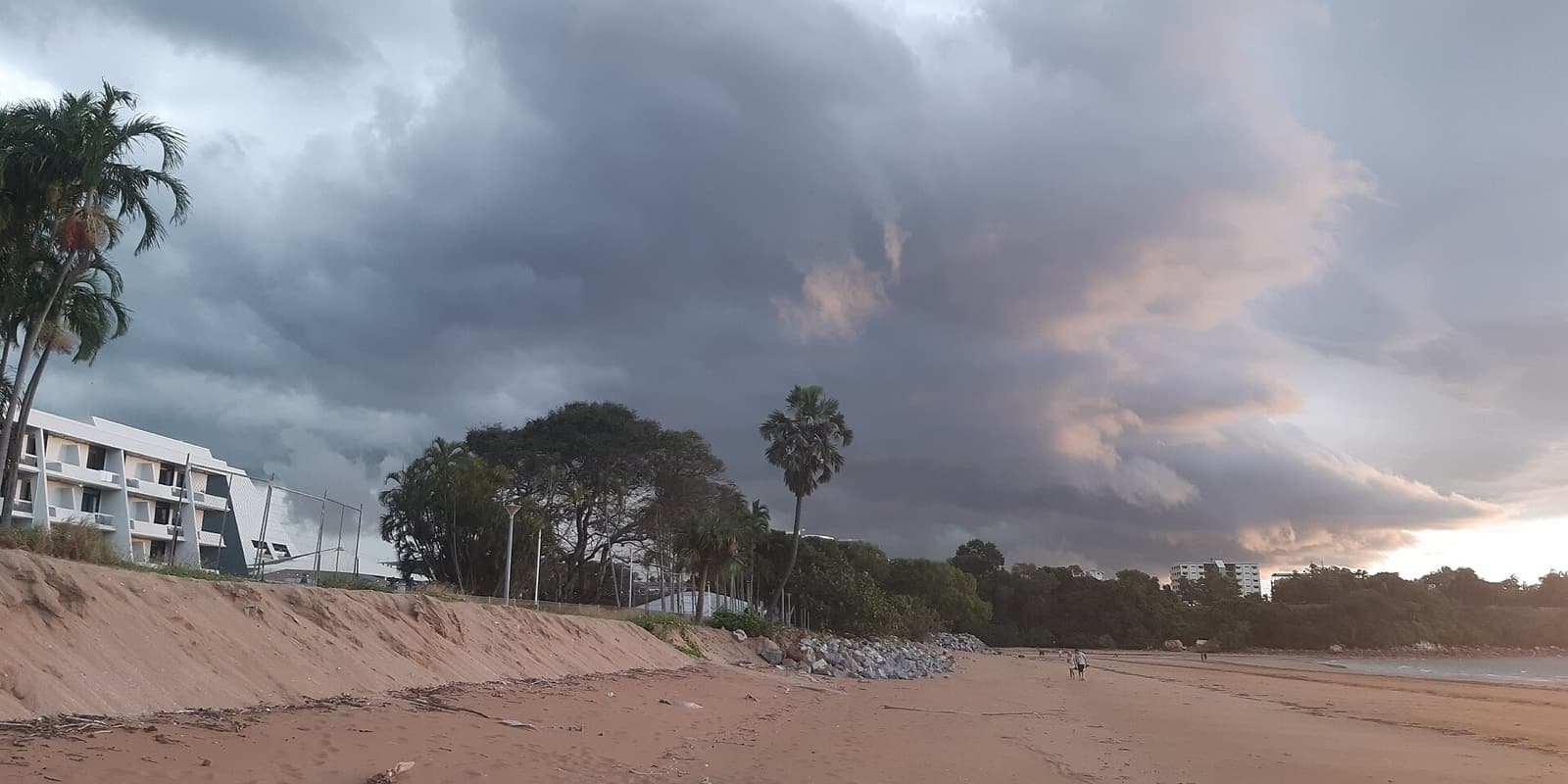
Darwin's build-up, from about October to December, is the classic case of feels like beating the temperature. Daytime maximums barely change all year, but rising dew points make the weeks before the monsoon the most uncomfortable of the year. Our wet season guide covers it.
Heat index: the American version
If you've used an American weather app, you've seen the heat index. The US National Weather Service defines it as what the temperature feels like when relative humidity is combined with air temperature. It ignores wind, and its values assume shade; the NWS warns that full sunshine can add up to 15 °F (about 8 °C).
In Australia the Bureau's thermal comfort figures use Steadman's apparent temperature instead, which it treats as a heat index in hot weather and a wind chill in cold weather. For sport and outdoor work, the Bureau also publishes an approximation of the wet bulb globe temperature (WBGT), and Sports Medicine Australia's hot weather advice explains how to use it.
Wind chill: when feels like is lower than the temperature
In winter the same formula works the other way and acts as a wind chill. Wind strips heat from exposed skin, so a breezy day feels colder than the thermometer suggests.
A few worked examples using the Bureau's formula:
- Hobart at 6 °C with 75% humidity and a 30 km/h westerly feels like about −1 °C.
- Canberra at 2 °C on a frosty morning with a 20 km/h breeze feels like about −4 °C.
- An alpine summit at −2 °C with a 40 km/h wind feels like about −12 °C, which is when frostbite and hypothermia become real risks for skiers and walkers.
Wind chill doesn't make objects colder than the air. Water won't freeze and car windscreens won't frost because of wind chill alone; they cool only to the real air temperature.
What our forecast pages show
Every town page on this site shows the current temperature with a feels like figure, relative humidity and wind speed and direction. The hourly forecast lists temperature and feels like side by side for each of the next 48 hours, along with humidity and wind, so you can see when the sticky part of the day starts and when a change will bring relief. Our feels like values come from the forecast model and combine temperature, humidity, wind and sunshine for that hour.
Use the gap between the two numbers. When the feels like figure sits several degrees above the temperature, plan exercise for early morning, drink more water and expect a warm night. When it sits well below in winter, it's the wind, so dress for the feels like, not the thermometer. For the national picture, check Australia's weather today.
Common questions
Is the feels like temperature accurate?
It is a good guide, not a measurement. Nobody can put a thermometer on 'feels like'; it is calculated from temperature, humidity and wind using a model of how the human body gains and loses heat. It assumes a typical adult in the shade. Your own experience will differ with sun, exercise, clothing and what you're used to: the Bureau notes that people in hot climates are comfortable at higher temperatures than people from cool ones.
Is feels like the same as heat index?
Not quite. The heat index, used by the US National Weather Service, combines only temperature and relative humidity and applies in shade. The Bureau's apparent temperature also includes wind, so it can drop below the real temperature on a breezy day and doubles as a wind chill in winter. On a hot, humid, still afternoon the two give similar answers.
What feels like temperature is dangerous?
There is no single cut-off, but in the high 30s and above, especially with high humidity, heat illness becomes a real risk during exercise or outdoor work. The danger is greatest when humid nights stay warm and give the body no break. For health warnings, follow the Bureau's heatwave warnings rather than the feels like number. See our heatwave guide.
Can the dew point be higher than the temperature?
No. The dew point can equal the air temperature, which means the air is saturated at 100% relative humidity and you get fog, dew or mist, but it can't stay above it. If air cools below its dew point, water condenses out until the two match again. That's why the dew point sets a floor on how low the temperature drops on a humid night.
Does feels like temperature affect water freezing or plants?
No. Wind chill and apparent temperature describe heat loss from warm bodies. A bucket of water, a car or a plant can't be cooled below the actual air temperature by wind, only cooled faster towards it. Frost depends on the real temperature at ground level, which on still, clear nights can be a few degrees below the official reading taken in a screen about 1.2 metres above the ground.
Why is the feels like temperature higher than the actual temperature?
Because the air is humid and the wind is light. When there is a lot of water vapour in the air, sweat evaporates slowly and your body can't shed heat, so it feels hotter than the thermometer reading. This is normal in Darwin, Cairns and Brisbane in summer. A breeze, drier air or a southerly change brings the feels like figure back down towards the real temperature, or below it.