Australia's fire danger rating tells you how dangerous a bushfire would be if one started, not how likely a fire is. Since 1 September 2022 the national Australian Fire Danger Rating System has used four levels, Moderate, High, Extreme and Catastrophic, each with a clear action, plus No Rating on low-risk days. Ratings are calculated for each fire weather district from Bureau of Meteorology forecasts and vegetation data, and issued with the state fire services, which also declare total fire bans.
- Four levels since 1 September 2022: Moderate (plan and prepare), High (be ready to act), Extreme (take action now), Catastrophic (leave bushfire risk areas).
- No Rating means fires are unlikely to spread in a threatening way, not that fires can't happen.
- Each level matches a band of the Fire Behaviour Index, from 12 for Moderate to 100 and above for Catastrophic.
- Total fire bans are declared separately by each state's fire service and can apply below Extreme.
- Black Summer 2019–20 killed 33 people directly, destroyed over 3,000 homes and burnt over 24 million hectares.
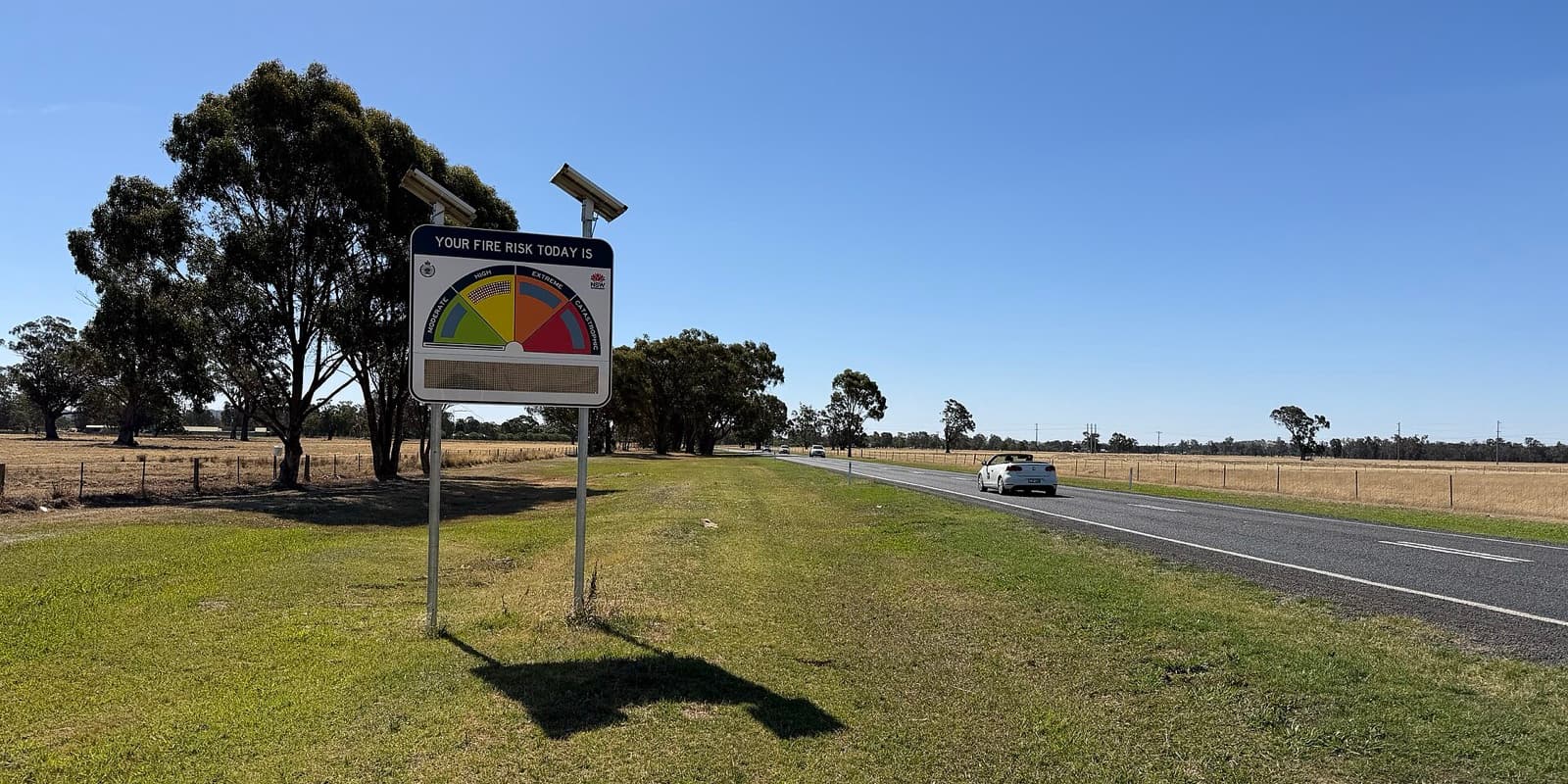
Drive through country New South Wales or Victoria in summer and you'll pass the half-dial signs on the edge of town, the needle swinging between green, yellow, orange and red. They are the most visible part of the Australian Fire Danger Rating System, and they are worth understanding properly, because the advice for Extreme and Catastrophic days is very different from what many people assume.
What are the fire danger ratings?
A fire danger rating describes how dangerous a bushfire would be if one started. It isn't a forecast of whether a fire will start. The higher the rating, the faster a fire would spread, the harder it would be to control and the greater the threat to lives and homes.
Since 1 September 2022 every state and territory has used the same national scale, the Australian Fire Danger Rating System (AFDRS). It replaced the old six-level system (Low-Moderate up to Catastrophic) with four levels, each tied to an action, plus a white "No Rating" bar for days when no proactive action is needed. The same colours and wording now apply whether you are in Albany, Alice Springs or the Adelaide Hills.
| Rating | Key message | Fire Behaviour Index | What it means |
|---|---|---|---|
| No Rating | No proactive action needed | 0 to 11 | Fires may start but are unlikely to spread in a fast or threatening way |
| Moderate | Plan and prepare | 12 to 23 | Most fires can be controlled |
| High | Be ready to act | 24 to 49 | Fires can be dangerous |
| Extreme | Take action now to protect your life and property | 50 to 99 | Fires will spread quickly and be extremely dangerous |
| Catastrophic | For your survival, leave bushfire risk areas | 100+ | If a fire starts and takes hold, lives are likely to be lost |
What each fire danger rating means and what to do
Moderate: plan and prepare
Most fires can be controlled. Stay up to date with conditions, and use quieter days to get your bushfire plan in order: clear gutters, sort out who goes where, and pack the essentials. In some areas controlled burning may go ahead on Moderate days if permits allow.
High: be ready to act
There's a heightened risk and fires can be dangerous. Be alert for fires in your area and decide now what you'll do if one starts. If you're travelling, the safest option is to avoid bushfire risk areas.
Extreme: take action now
Fires will spread quickly and be extremely dangerous. Check your bushfire plan and that your property is fire-ready, and act immediately if a fire starts. If you and your home aren't prepared to the highest level, go to a safer location well before a fire arrives, and reconsider travel through bushfire risk areas. Homes may not withstand fires in these conditions. In South Australia, Extreme and Catastrophic days come with a total fire ban.
Catastrophic: leave bushfire risk areas
These are the worst conditions for a bush or grass fire. Homes are not designed or built to withstand fires in Catastrophic conditions, you may not be able to leave once a fire starts, and help may not be available. The advice from every fire service is the same: for your survival, don't be in a bushfire risk area. Leave the night before or early in the morning. If you live near bush or grassland, you're in a bushfire risk area.
Tasmania Fire Service notes that Extreme and Catastrophic days occur around 10 times a year in some parts of Tasmania, so these are not once-in-a-lifetime events.
Who sets the fire danger rating?
The rating is a joint product. The Bureau of Meteorology forecasts the weather and the rating each day, turning its forecasts into a Fire Behaviour Index (FBI) using fuel and vegetation information from the fire agencies. The state and territory fire services then issue and communicate the ratings to the public: NSW RFS, CFA in Victoria, Queensland Fire Department, SA Country Fire Service, Tasmania Fire Service, DFES in Western Australia, Bushfires NT and the ACT Emergency Services Agency.
The FBI runs from 0 to over 100 and is calculated for eight different vegetation types. The old system, built on science more than 60 years old, only distinguished forest from grass. That's why two districts with the same weather can now get different ratings.
Ratings are issued for fire weather districts, large areas that group similar country together. Victoria, for example, has nine, from the Mallee and Wimmera to East Gippsland and Central (which includes Melbourne). Our fire danger ratings page shows the current rating for each district around Australia, and you can match your town to its district from your local forecast, for example the Wagga Wagga forecast or the Bendigo forecast.
What is a total fire ban?
A total fire ban is a legal declaration, separate from the rating, that bans lighting fires in the open and many activities that could start one. It is declared for particular days and districts, and each state does it a little differently:
- NSW: declared by the NSW Rural Fire Service. All fire permits are suspended, no fires may be lit in the open, and welding, grinding and similar hot work outdoors is banned unless exempted.
- Victoria: declared by CFA's Chief Officer. CFA weighs current fires, firefighting resources and lightning or human ignition risk as well as the rating, so a ban can be declared on a day that isn't rated Extreme.
- South Australia: the CFS shows a total fire ban with every Extreme and Catastrophic rating.
- Western Australia: DFES declares total fire bans, and local governments can also issue harvest and vehicle movement bans. Breaching a total fire ban can mean a $1,000 infringement, or for serious cases up to $25,000 and 12 months' imprisonment.
- Queensland: the Queensland Fire Department can declare local fire bans, and in extremely dangerous conditions a State of Fire Emergency, which adds stricter limits on tools and equipment.
- Tasmania, the ACT and the NT: check Tasmania Fire Service, the ACT Emergency Services Agency or Bushfires NT, which publish total fire bans for their areas.
A total fire ban is also different from a fire danger period (Victoria) or bush fire danger period (NSW). The fire danger period is set for each local area before the season, lasts weeks or months, and brings rules on burning off, campfires and cooking outdoors. Total fire ban days sit on top of it, on the worst days.
Can I use a barbecue on a total fire ban day?
This is the question everyone asks in December. In NSW, wood, charcoal and heat-bead barbecues and wood-fired pizza ovens can't be used outdoors during a total fire ban. A gas or electric barbecue can be used on your property if a responsible adult is in direct control of it and the ground within 2 metres is cleared of anything that can burn. Portable gas barbecues are banned in NSW national parks and state forests on total fire ban days, although some fixed park barbecues may be allowed.
The rules differ by state, and the fire service's own "can I or can't I" list is the final word. When in doubt, make a salad.
Black Saturday, Black Summer and why the ratings changed
On 7 February 2009, at the end of a record heatwave in which Melbourne reached 46.4 °C, the Black Saturday fires killed 173 people and destroyed more than 3,500 structures in Victoria. The top "Catastrophic" level was added to the old rating system in 2009, an admission that some fire days are simply unsurvivable in the wrong place.
Ten years later came the Black Summer of 2019–20. Greater Sydney, including the Blue Mountains and Central Coast, was rated Catastrophic for 12 November 2019 for the first time since that level was introduced. By the end of the season, according to the Royal Commission into National Natural Disaster Arrangements, over 24 million hectares had burnt, 33 people had died directly in the fires and over 3,000 homes were destroyed.
The new ratings had their hardest test so far in January 2026. On 9 January, high temperatures and strong winds brought extreme to catastrophic fire conditions to most of Victoria and southern parts of South Australia and NSW, and dry lightning started dozens of fires. By the end of the month the Bureau reported more than 400 homes lost in Victoria and nearly 450,000 hectares burnt. Our guide to heatwaves covers the heat that drove those days.
How to check your fire danger rating
Make it a habit through the warmer months, the same way you check the forecast:
- Look up today's and tomorrow's rating for your district on our fire danger page or your fire service's app.
- Check for active fires and warnings on the Bureau warnings page, or by state, such as NSW warnings and Victorian warnings.
- Watch the wind. Most bad fire days end with a cool change that swings the wind from north-west to south-west, and that change can turn a fire's long flank into a wide front. The hourly wind forecast on your town's page, like the Canberra hourly forecast, shows when it's due.
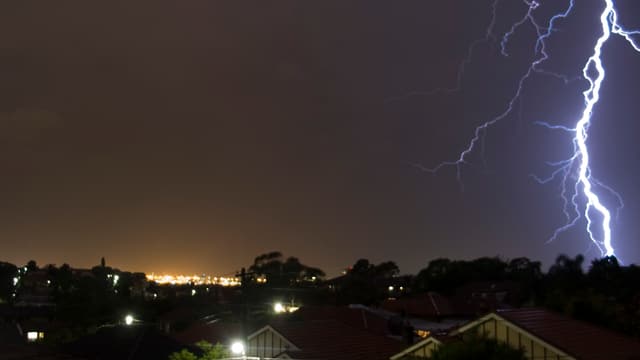
- Remember dry lightning. Storms with little rain start many of the worst fires; our thunderstorm and lightning guide explains why.
In northern Australia the fire season runs through the dry season rather than summer, so the same checks apply in the Top End and the Kimberley in the middle of the year. If you are planning a trip into the bush in summer, look at the rating for every district on your route, not just at home, and have a plan for the day it reads Catastrophic.
Common questions
What is the fire danger rating today?
Ratings are issued each day for every fire weather district, usually with a forecast for the next few days. Check our fire danger ratings page for your district, or your state fire service's website and app (NSW RFS, CFA, CFS, DFES, QFD, TFS, Bushfires NT, ACT ESA). Ratings can change from one district to the next, so look up the district where you'll actually be, not just where you live.
Does a total fire ban include gas BBQs?
Usually not, but with conditions. In NSW you can use a gas or electric barbecue on your own property during a total fire ban if a responsible adult is in direct control of it and the ground within 2 metres is cleared of anything that can burn. Wood, charcoal and heat-bead barbecues and pizza ovens are banned outdoors. Rules differ in national parks and between states, so check your fire service before lighting up.
What temperature is a total fire ban?
There is no set temperature. A total fire ban is declared when forecast weather (heat, low humidity and strong wind together), dry fuel and the state of current fires make any new fire hard to control. A 38 °C still day can be lower risk than a 33 °C day with a gale-force northerly and humidity of 10%. In Victoria, CFA can declare a ban even when the rating is below Extreme.
What does catastrophic fire danger mean?
Catastrophic is the top level. If a fire starts and takes hold, lives are likely to be lost and homes are not designed to withstand it. The advice is simple: for your survival, leave bushfire risk areas, ideally the night before or early in the morning. Greater Sydney's first Catastrophic forecast was for 12 November 2019, at the start of the Black Summer.
How is the fire danger rating calculated?
The rating comes from the Fire Behaviour Index (FBI), a 0 to 100+ scale that combines forecast weather with fuel and vegetation information, across eight vegetation types rather than the old forest and grass split. Each rating covers a band of the index: FBI 12 to 23 is Moderate, 24 to 49 High, 50 to 99 Extreme and 100 or more Catastrophic.
Is a fire danger rating the same as a bushfire warning?
No. A rating describes how dangerous a fire would be if one started. Once a fire is actually burning, the fire service issues warnings under the Australian Warning System: Advice, Watch and Act, and Emergency Warning. You can be under an Extreme rating with no fire nearby, or under an Emergency Warning on a High day. Check both, and see our weather warnings guide.