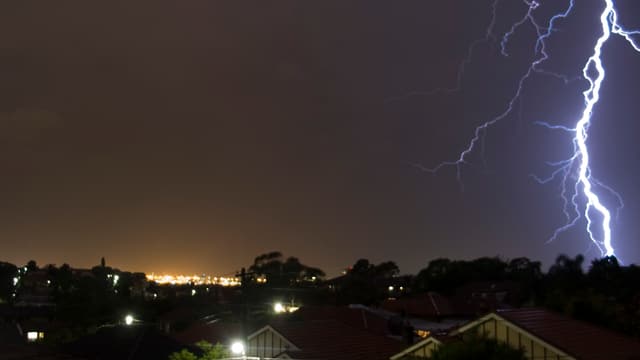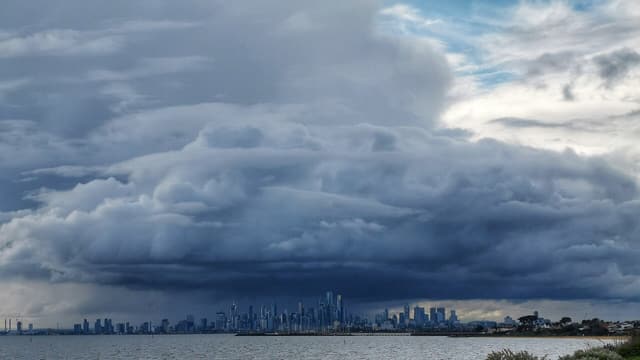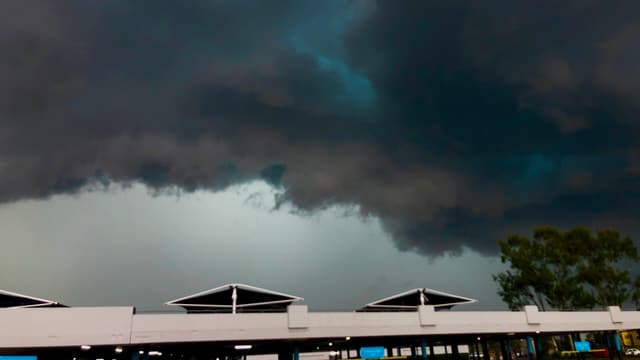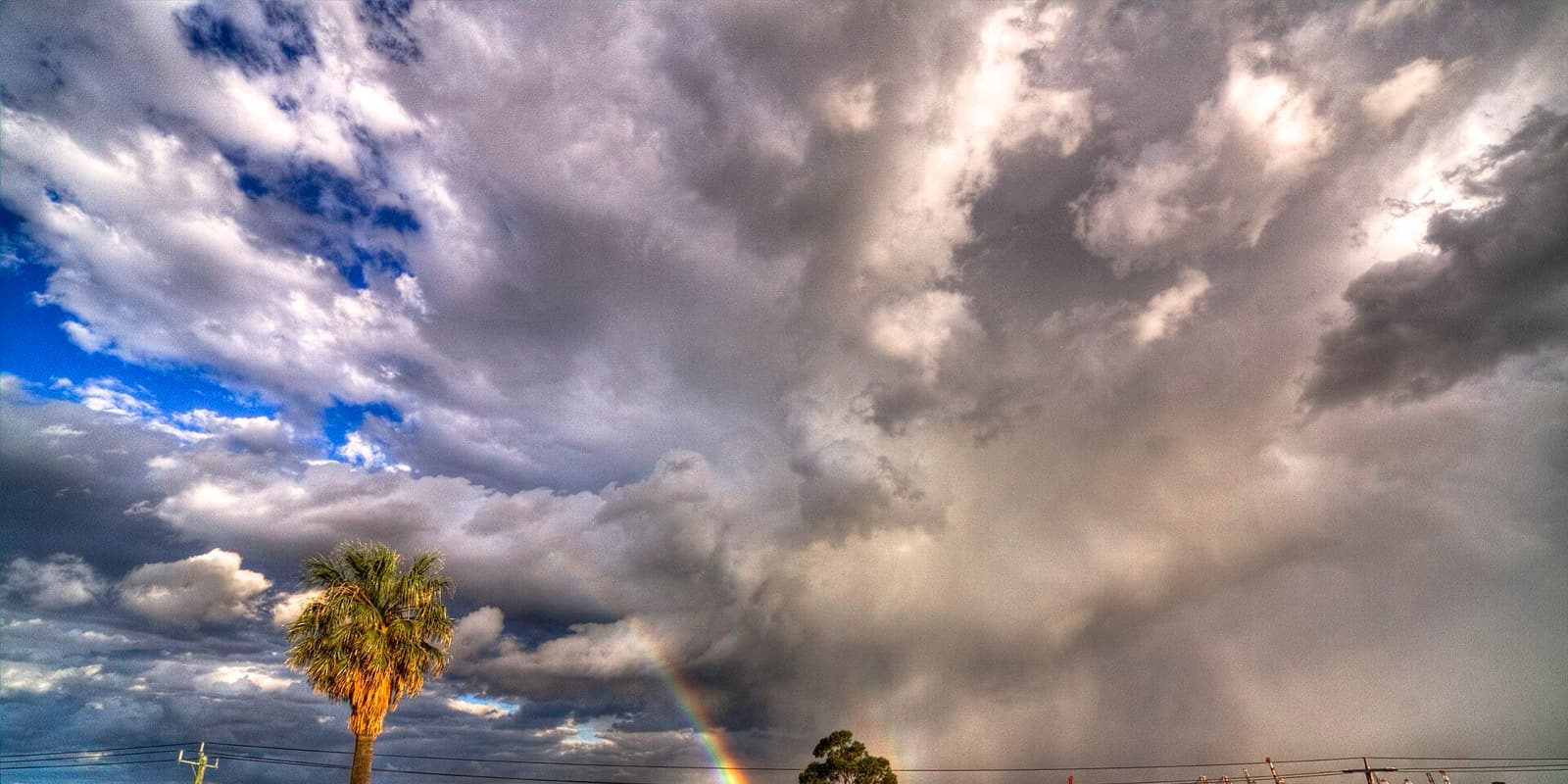
Thunderstorm asthma happens when high levels of grass pollen meet a particular kind of thunderstorm. Pollen grains are swept up, burst into tiny particles and are concentrated in the gusty winds just ahead of the storm, where people breathe them deep into their lungs. In Victoria the grass pollen season, and the state's epidemic thunderstorm asthma risk forecast, run from 1 October to 31 December. On 21 November 2016 Melbourne had the world's largest recorded event, which contributed to 10 deaths.
- Thunderstorm asthma needs two ingredients: high grass pollen and a storm with strong gusty winds.
- People with asthma or springtime hay fever are at risk, including people who have never been diagnosed with asthma.
- Victoria's risk forecast runs 1 October to 31 December, covers three days and is published on VicEmergency.
- A grass pollen count of 50 grains per cubic metre or more is High; 100 or more is Extreme.
- Melbourne has one big spring pollen peak; Brisbane's grass pollen peaks come in summer and autumn.
Every spring, Melburnians with hay fever start checking two things before they leave the house: the pollen count and the storm forecast. Since November 2016 the combination has had a name most people know, thunderstorm asthma. It is rare, but when it hits it hits thousands of people within an hour or two.
What is thunderstorm asthma?
Thunderstorm asthma is a sudden outbreak of asthma triggered by a specific mix of weather and pollen. Grass pollen grains are fairly large, and on a normal day they get caught in your nose and throat, which is what causes hay fever. During certain storms things change:
- Grass pollen grains are swept up by the wind and carried long distances.
- Some of the grains burst open, releasing tiny particles loaded with allergen.
- Those particles are concentrated in the gusty outflow winds that arrive just before the storm.
- Because they are so small, people breathe them deep into their lungs, where they can rapidly trigger asthma symptoms.
When many people develop asthma over a short period in these conditions, it's called epidemic thunderstorm asthma. In Victoria, perennial ryegrass, which covers much of the state's pasture, is considered the main grass behind these events. Not every storm on a high pollen day causes one. It takes the right kind of storm, with strong winds, at the right time.
The 21 November 2016 Melbourne thunderstorm asthma event
On the evening of 21 November 2016, a storm swept across Melbourne on a day of very high grass pollen. What followed was, in the words of the Victorian Department of Health, the world's largest epidemic thunderstorm asthma event.
- In the 30 hours from 6 pm, respiratory-related presentations to Melbourne and Geelong public hospitals rose by 672%, about 3,365 more than expected from the three-year average.
- Calls to 000 and Ambulance Victoria spiked so sharply that crews and emergency departments were pushed to their limits.
- Later research estimated around 10,000 extra asthma-related visits to GPs across metropolitan Melbourne between 21 and 23 November.
- The event contributed to 10 deaths, investigated by the State Coroner, who delivered findings on 9 November 2018.
The Inspector-General for Emergency Management reviewed the response and reported in April 2017. The big change that came out of it was a forecasting system that didn't exist before.
Victoria's epidemic thunderstorm asthma forecast
Victoria's epidemic thunderstorm asthma risk forecast became operational on 1 October 2017. It combines the Bureau of Meteorology's forecast of the uncommon type of thunderstorm that can trigger an event with grass pollen forecasts for each of the state's weather districts.
| Forecast | Colour | What it means |
|---|---|---|
| Low | Green | The ingredients for an event aren't expected; an event is unlikely |
| Moderate | Orange | One ingredient may be present (high pollen or a severe storm with strong winds); a moderate chance of an event |
| High | Red | High pollen and severe thunderstorms with strong winds are both likely; an increased risk of an event |
The forecast runs from 1 October to 31 December, covers three days (today, tomorrow and the day after) and is published on the VicEmergency website and app, where you can set a watch zone to get notifications when a high risk is forecast for your area. It is not a formal warning. A high forecast doesn't mean an event will happen, and a low one doesn't guarantee it won't, so it should never replace good everyday asthma and hay fever management.
For the storm side of the picture, check the warnings for Victoria and the Victorian rain radar on high-risk days. Our guide to thunderstorms and lightning explains how severe storms form.
What the pollen count means
A pollen count is the average number of pollen grains in a cubic metre of air over a day. The Melbourne Pollen Count and Forecast, run by the University of Melbourne's School of BioSciences with AirHealth, has been measuring grass pollen in Melbourne's air for more than 30 years. It classifies grass pollen like this:
| Grass pollen grains per m³ of air | Level |
|---|---|
| 0 to 19 | Low |
| 20 to 49 | Moderate |
| 50 to 99 | High |
| 100 or more | Extreme |
Most people sensitive to grass pollen will have symptoms on High days. Forecasts are issued daily at 7:30 am for the next three days, and since 2016 the service has worked with the Victorian Department of Health and the Bureau. Victoria now has automated pollen monitors at seven locations: Melbourne, Geelong, Ballarat, Bendigo, Hamilton, Churchill and Wodonga. That gives district forecasts well beyond the city, from the Mallee to East Gippsland.
Grass pollen counts climb on warm, dry, windy days, especially after a wet winter and early spring have grown plenty of grass. A cool, showery change usually knocks them back. The Melbourne 14-day forecast is a decent guide to which days will be worst.
When is hay fever season in Australia?
Hay fever, or allergic rhinitis, affects about one in five Australians, and grass pollen is the main outdoor trigger. When the season peaks depends on latitude. The AusPollen project, which monitored grass pollen in four eastern cities from 2016 to 2020, found:
- Melbourne: a single major spring peak, typically October to December.
- Sydney and Canberra: a major spring peak and a smaller summer one.
- Brisbane: several major peaks through summer and autumn, from subtropical grasses, with grass making up a bigger share of all pollen.
So if you move from Brisbane to Melbourne, expect your worst weeks to shift. The size of each season also varies a lot from year to year with rainfall, pasture greenness and the number of days over 30 °C.
How to prepare for thunderstorm asthma season
The advice from the Victorian health department, healthdirect and the National Asthma Council is consistent, and most of it should happen before October.
Who is at risk: people with current or past asthma, people with undiagnosed asthma, and people with springtime hay fever. The risk is highest for those with both asthma and hay fever, especially if their asthma is poorly controlled. Even if you don't think you have asthma, don't ignore wheezing or breathlessness; see your GP.
Before the season:
- See your GP about an asthma action plan, and take your preventer as prescribed if you have one.
- Get your hay fever properly treated. A pharmacist or GP can advise on nasal sprays and other options.
- Know asthma first aid, and keep a blue/grey reliever puffer (such as salbutamol, sold over the counter) where you can reach it.
On high-risk days (October to December):
- Check the thunderstorm asthma forecast on VicEmergency and the pollen forecast in the morning.
- Avoid being outdoors in a thunderstorm, especially in the gusty winds just before it arrives.
- Go inside, close doors and windows, and turn off any air conditioning that draws in outside air, such as evaporative coolers, or set it to recirculate. In the car, keep windows up and the air on recirculate.
- Carry your reliever, and watch out for family members, especially anyone who has had hay fever but never asthma.
If someone is having trouble breathing, start asthma first aid straight away and call 000 if they aren't breathing, are getting worse or not improving, have no reliever, or you're unsure whether it's asthma. For advice in Victoria, Nurse-on-Call is available on 1300 60 60 24.
Pollen, storms and other Australian cities
Victoria runs a statewide thunderstorm asthma forecast, but the hazard isn't confined there. Better Health records an event in Albury Wodonga on 6 November 2024, where grass pollen and a thunderstorm combined just over the border. If you live in the Riverina or northern Victoria, check both the NSW warnings and the Victorian forecast.
Across the rest of the country, spring storm season and peak pollen don't always line up the way they do in Melbourne. Keep an eye on storm warnings and your local pollen service, and for spring's other quick changes see our guide to Melbourne's four-seasons-in-one-day weather.
Common questions
Is thunderstorm asthma only in Melbourne?
No. Melbourne's 2016 event is the best known, but thunderstorm asthma has been recorded elsewhere in south-eastern Australia. On 6 November 2024 a thunderstorm and high grass pollen triggered an event in Albury Wodonga. Areas with large grass pastures and spring storms may carry some risk. Victoria has a dedicated forecast; elsewhere, watch pollen levels and severe thunderstorm warnings.
What does thunderstorm asthma feel like?
It feels like a sudden asthma attack: shortness of breath, wheezing, a tight chest and coughing, often coming on within minutes during or just after a storm. People who usually only get sneezing and itchy eyes from hay fever can be caught off guard. Treat it with asthma first aid and a blue/grey reliever puffer, and call 000 if the person isn't improving, can't breathe or you're unsure.
Does the pollen count go down after rain?
Steady rain usually washes pollen out of the air and lowers the count for a while. Thunderstorms are the exception: the strong gusts ahead of a storm can whip up pollen and break it into tiny particles, which is exactly what drives thunderstorm asthma. Warm, dry, windy days, especially after a wet winter that grew plenty of grass, tend to bring the highest counts.
Why is grass pollen only counted from 1 October to 31 December?
That's the main grass flowering season in Victoria, when perennial ryegrass and other pasture grasses release most of their pollen. The Melbourne Pollen Count and Forecast and the state monitoring network count daily during those three months, and Victoria's epidemic thunderstorm asthma forecast runs over the same period. Outside it, grass pollen is generally low in the south-east.
When does hay fever season start in Australia?
It depends where you live. In Melbourne and much of south-eastern Australia the main grass pollen season runs from October to December, with one big spring peak. Sydney and Canberra have a major spring peak and a smaller summer one. Brisbane's subtropical grasses give several peaks through summer and autumn. Tree and weed pollens can extend symptoms beyond those months.
Can a face mask prevent thunderstorm asthma?
Not reliably. Healthdirect notes that face masks don't protect against the tiny allergen particles that cause thunderstorm asthma. The best protection is good asthma and hay fever control before the season starts, carrying a reliever, and getting indoors with doors and windows shut before a storm arrives.