Yes, Australia gets tornadoes: the Bureau of Meteorology estimates about 50 a year, with historical records showing between 30 and 80, and many more probably go unreported in remote areas. The strongest come from supercell thunderstorms, most often in central and eastern New South Wales, south-east Queensland and north-east Victoria during late spring and early summer. There are no separate tornado warnings in Australia: the Bureau includes tornadoes in its severe thunderstorm warnings.
- About 50 tornadoes a year in Australia (30 to 80 in historical records), most of them short-lived and weak.
- Supercell tornadoes are most common in central and eastern NSW, south-east Queensland and north-east Victoria, in late spring and early summer.
- Cold fronts in southern Australia can spawn fast-moving tornadoes in the cooler months.
- Kurnell, Sydney, 16 December 2015: an F2 tornado and a 213 km/h gust, the strongest ever recorded in NSW.
- Tornadoes are warned for within severe thunderstorm warnings. If one is coming, shelter in a small, windowless inner room.
Mention a tornado in Australia and someone will say "we don't get those here". We do. They are smaller and rarer than the giants of the American Midwest, but every year Australian tornadoes rip roofs off houses, flatten crops and, now and then, make headlines in a capital city. Here's how often they happen, where, what makes them, and what to do if one heads your way.
Does Australia get tornadoes? How many each year
The Bureau of Meteorology puts the figure at about 50 tornadoes a year. Historical records show anything from 30 to 80 in a year, and the real number is higher, because a tornado that touches down on an empty paddock in western Queensland may never be seen or reported. As one Bureau forecaster told the ABC, plenty go unreported simply because the population is so sparse.
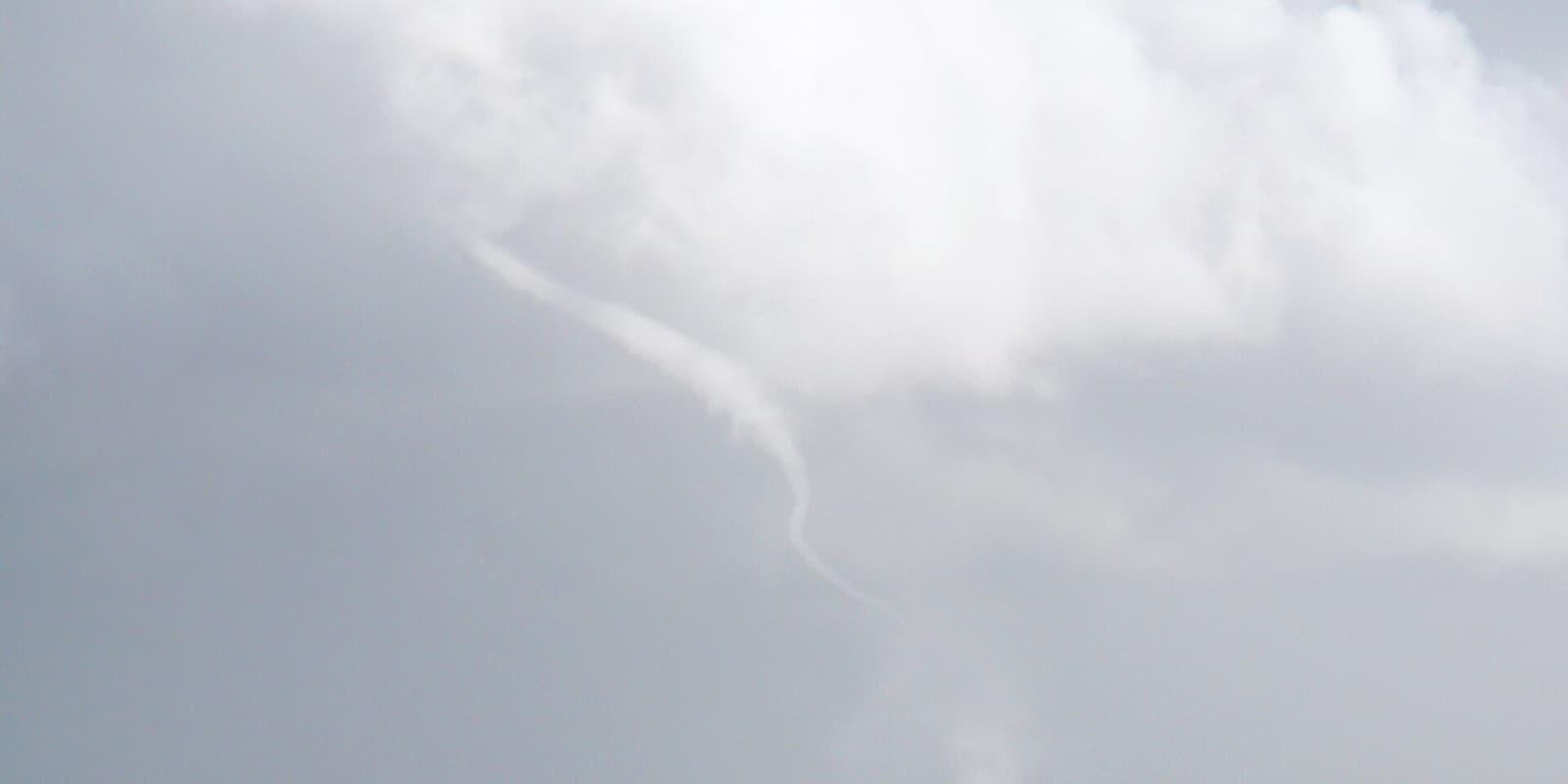
A tornado is a violently rotating column of air that reaches from a cloud to the ground. To count, it has to be touching both the ground and its parent cloud at the same time. Tornadoes can last from under a minute to more than an hour, range from a few tens of metres to more than a kilometre wide, and have winds that can exceed 300 km/h.
Australia also gets the occasional tornado outbreak, where one weather system produces several. On 28 September 2016 at least seven tornadoes hit South Australia, and the storm system led to a state-wide power outage.
Supercells: the storms behind the strongest tornadoes
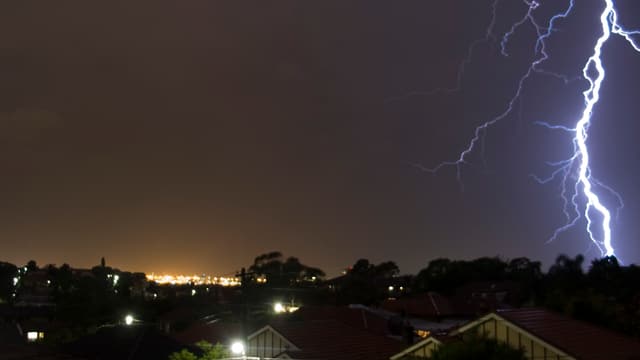
Most strong tornadoes come from supercell thunderstorms. A supercell forms when the wind changes sharply in speed and direction with height (wind shear). That shear sets the storm's updraft rotating, creating a mesocyclone, and the low pressure under it can stretch a spinning column of air until it tightens into a tornado.
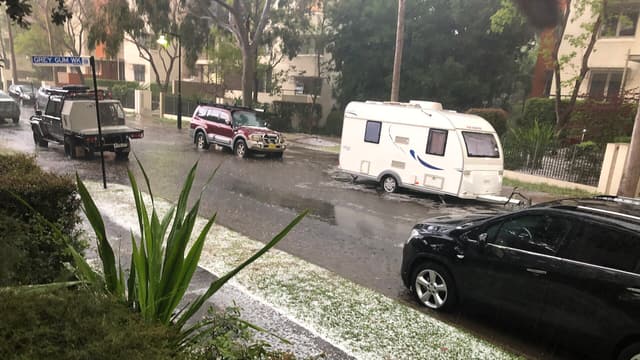
Supercells are the storms that produce the worst of everything: destructive winds, giant hail, torrential rain and tornadoes. They can hold together for hours. A hailstone 160 mm across was recorded at Yalboroo in Queensland on 19 October 2021.
According to the Bureau, supercell tornadoes in Australia are most common in:
- central and eastern New South Wales
- south-east Queensland
- north-east Victoria
and most likely in late spring and early summer, when conditions for intense thunderstorms peak. Supercell tornadoes can also form in the outer rainbands of tropical cyclones.
Supercell storms in Brisbane and south-east Queensland
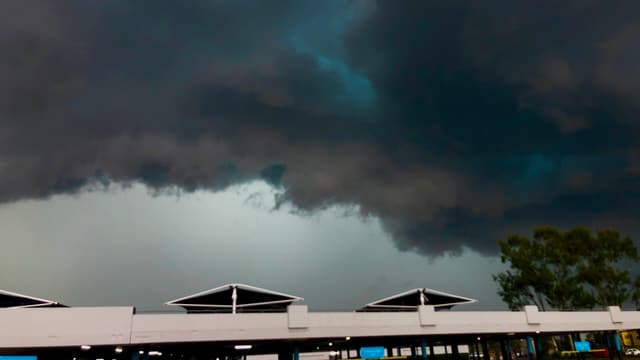
South-east Queensland is supercell country from October to January. On 27 November 2014 a severe thunderstorm tore through Brisbane's southern suburbs and the CBD with very large hail, flash flooding and a 141 km/h gust at Archerfield. On 22 October 2021 a tornado briefly touched down at Brisbane Airport during a supercell storm, damaging property and disrupting flights. During storm season, keep the Queensland rain radar and the Brisbane forecast handy, and read our guides to thunderstorms and lightning and hail.
Non-supercell tornadoes and cold-front tornadoes
The second type forms along boundaries between air masses, such as cold fronts and sea breeze fronts. Sharp changes in wind direction along the boundary create small pockets of rotation, and a fast-growing cloud above can stretch one into a tornado. Several can form along the same line.
In the cooler months, strong cold fronts crossing southern Australia can produce tornadoes of this kind. They develop quickly and move fast, which makes them hard to forecast and detect.
The strongest tornadoes in Australian history
Measuring a tornado's wind directly is almost impossible, so they are rated from the damage they cause. The Bureau now uses the Enhanced Fujita scale, from EF0 to EF5, and calls anything EF2 or stronger a significant tornado. Older events were rated on the original Fujita (F) scale. Tornadoes crossing open grassland leave few damage clues, so their strength is probably often underestimated.
| Tornado | Date | Rating | What happened |
|---|---|---|---|
| Bucca, near Bundaberg, Qld | November 1992 | F4 | Destroyed nine homes in about 10 minutes; some forecasters think it may have been F5 |
| Kurnell, Sydney, NSW | 16 December 2015 | F2 | 213 km/h gust at Kurnell, the strongest ever recorded in NSW; damaged homes and the desalination plant |
| South Australia outbreak | 28 September 2016 | Multiple tornadoes | At least seven tornadoes; the storm system led to a state-wide power outage |
| Brisbane Airport, Qld | 22 October 2021 | Brief touchdown | Damage and flight disruption during a supercell |
The Bucca tornado is the one Queenslanders still talk about. A Bureau severe weather team surveyed the damage around Bucca and Kolan and rated it F4, making it the most violent Australian tornado with an official rating. The Bundaberg region has recorded a significant number of tornadoes over the decades.
Kurnell, on Botany Bay in Sydney's south, was a rare direct hit on a big city. The tornado crossed the peninsula mid-morning, and the Bureau's automatic weather station there recorded a gust of 213 km/h.
Waterspouts, landspouts, gustnadoes and willy-willies
- Waterspout: technically a non-supercell tornado over water, but the term is used for any tornado over water. Waterspouts are commonly seen along the east coast and around Darwin, especially in the warmer months. If one moves ashore it's a tornado, so treat it as one.
- Landspout: a non-supercell tornado over land, the dry-land cousin of the waterspout.
- Gustnado: a short-lived, shallow whirl along a storm's outflow. It isn't connected to the cloud above, so it isn't a tornado.
- Dust devil (willy-willy): a spinning column of dust that forms on clear, hot days over dry ground. Not a tornado, though big ones can still knock over a gazebo.
The Bureau is firm on one more point: there is no such thing as a "mini tornado". A tornado is a tornado, whatever its size.
How tornadoes are warned for in Australia
Australia has no separate tornado warning. Tornadoes are covered in the Bureau's severe thunderstorm warnings, which are issued when storms are expected to produce any of:
- large hail, 2 cm or more across
- damaging wind gusts of 90 km/h or more
- heavy rainfall that may lead to flash flooding
- tornadoes
A storm is called very dangerous when it's expected to bring giant hail of 5 cm or more, destructive gusts of 125 km/h or more, or intense rainfall. The Bureau adds tornadoes to a warning if one is likely to form, if radar shows strong evidence one may be occurring, or after a confirmed sighting.
You can see current Bureau warnings on this site, including the warnings for Queensland, and track storms on the rain radar. Our guide to weather warnings explains the different warning types.
What to do if a tornado is coming
The NSW SES lists the warning signs as frequent thunder and lightning, very dark skies sometimes tinged green or yellow, a loud roar or rumble, a rotating funnel at the rear base of a storm (often behind heavy rain or hail), or an approaching cloud of debris. If you see or hear those, or a warning mentions a tornado near you:
- Shelter immediately. In order of preference: a storm shelter, a basement, a small windowless room on the lowest floor of a sturdy building, an internal hallway, room or bathroom, or under a heavy table or desk.
- Stay away from windows, doors and outside walls. Protect yourself with mattresses or blankets and cover your head and neck with your arms.
- In a large building with a wide-span roof, such as a shopping centre or hall, move to an inner hallway or room on the ground floor.
- In a car, don't try to outrun it. Get to the nearest solid shelter. If the tornado is close, get out and lie low in a ditch, covering your head. Don't shelter under a bridge or overpass.
- Don't chase tornadoes. They can change direction suddenly.
- Afterwards, stay clear of fallen power lines and damaged buildings, wear shoes, and check on neighbours. Call Triple Zero (000) in a life-threatening emergency, or the SES on 132 500 for storm damage help.
Many tornadoes are over within minutes, so the decisions you make in the first few seconds matter. If you live in NSW or south-east Queensland, the best preparation is simple: know where your safest room is before storm season starts.
Common questions
How often do tornadoes happen in Australia?
About 50 times a year, according to the Bureau of Meteorology, though historical records show anywhere from 30 to 80 a year. The true number is higher, because tornadoes in remote, sparsely populated country often aren't seen or reported. Most are brief and weak, but strong tornadoes do occur.
What is the strongest tornado ever recorded in Australia?
The most violent with an official rating is generally taken to be the Bucca tornado near Bundaberg in Queensland in November 1992. A Bureau damage survey rated it F4 on the Fujita scale, and some forecasters have suggested it may have been an F5. It destroyed nine homes in about ten minutes.
When is tornado season in Australia?
Australia has no formal tornado season, but supercell tornadoes are most likely in late spring and early summer, roughly October to January, when severe thunderstorms peak in the east. In the south, tornadoes can also come with strong cold fronts in autumn and winter, and tornadoes can form in the rainbands of tropical cyclones in the north.
Are there mini tornadoes in Australia?
There's no such thing as a mini tornado, according to the Bureau. A tornado is a tornado regardless of its size or strength. What people often call a mini tornado may be a small, weak tornado, a gustnado along a storm's outflow, or a dust devil (willy-willy). Gustnadoes and dust devils aren't tornadoes because they aren't connected to a cloud.
Which way do tornadoes spin in Australia?
Tornadoes from supercell thunderstorms in the southern hemisphere usually spin clockwise, the same way as the parent storm's rotating updraft and the same direction as southern hemisphere lows and cyclones. Smaller non-supercell tornadoes and waterspouts can spin either way, so the direction of a funnel tells you little about how dangerous it is.
Where is Australia's tornado alley?
Australia doesn't have a tornado alley like the US Great Plains. The Bureau says supercell tornadoes are most common in central and eastern NSW, south-east Queensland and north-east Victoria. In Queensland, the south-east coast, the Darling Downs and the Wide Bay–Burnett region around Bundaberg have recorded a notable number of tornadoes.