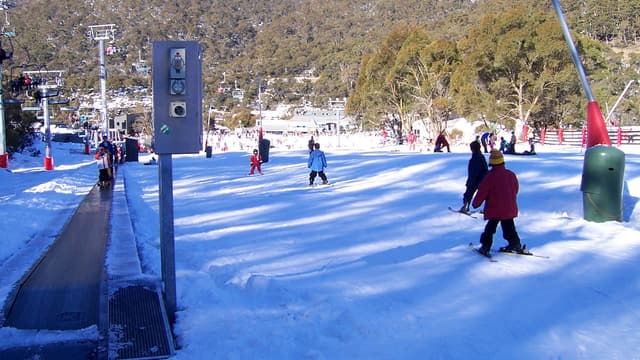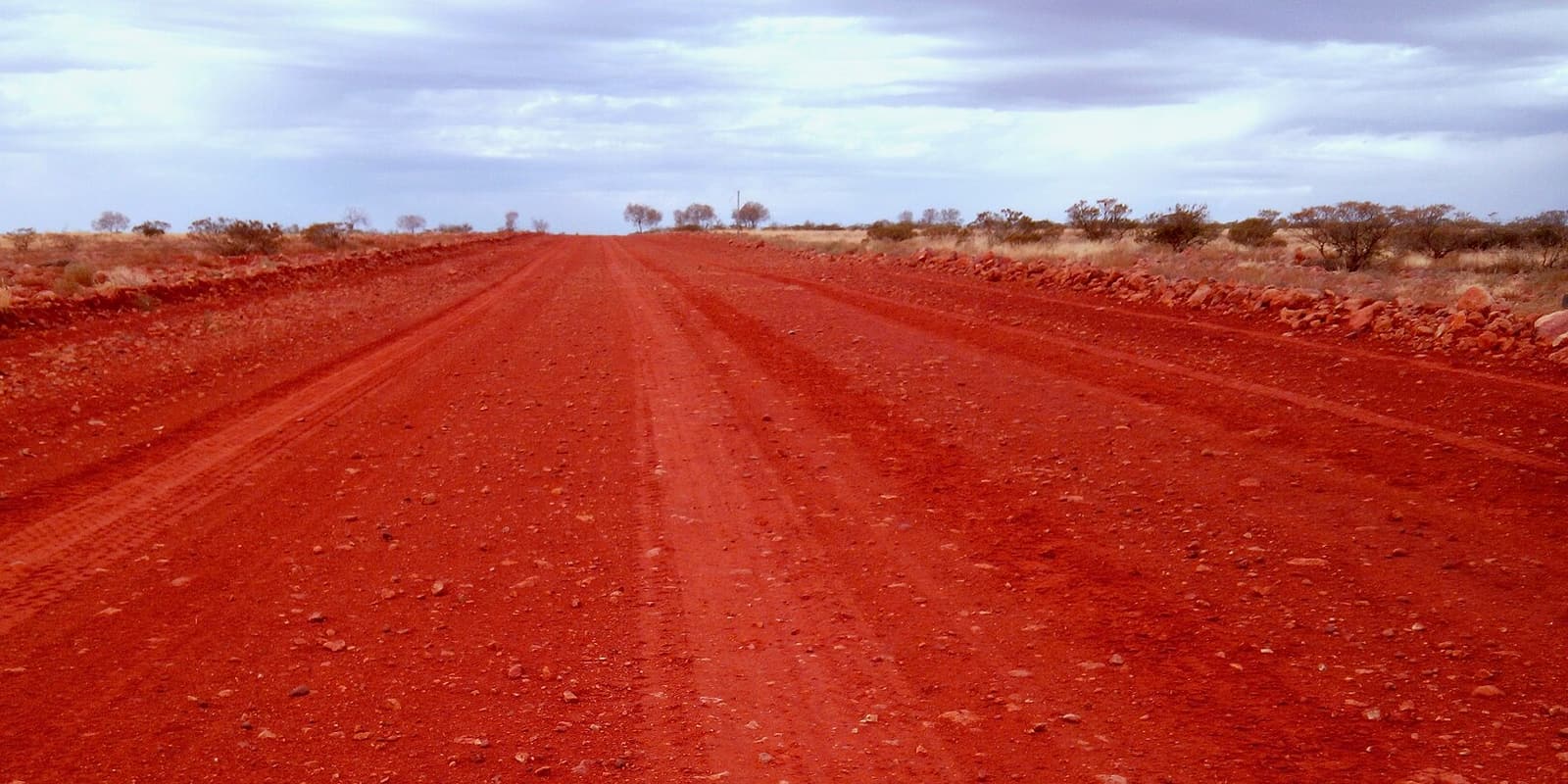
The hottest temperature recorded in Australia is 50.7 °C, measured at Oodnadatta Airport in South Australia on 2 January 1960 and equalled at Onslow Airport in Western Australia on 13 January 2022. The coldest is −23.0 °C at Charlotte Pass in the Snowy Mountains on 29 June 1994. The heaviest daily rainfall is 907 mm at Crohamhurst in south-east Queensland on 3 February 1893, and Bellenden Ker near Cairns holds the records for the wettest month and wettest year.
- Hottest: 50.7 °C at Oodnadatta (2 January 1960) and Onslow (13 January 2022).
- Coldest: −23.0 °C at Charlotte Pass, NSW, on 29 June 1994.
- Wettest year: 12,461 mm at Bellenden Ker (Top Station), Queensland, in 2000.
- Marble Bar reached 37.8 °C or more on 160 days in a row in 1923 and 1924.
- Strongest gust: 408 km/h on Barrow Island, WA, during Cyclone Olivia on 10 April 1996.
Australia's weather extremes are a mix of the expected and the surprising. Of course the outback holds the heat records. Fewer people know that the country's coldest temperature is colder than anything measured in Tasmania, that a Queensland mountain once received more than 5 metres of rain in a single month, or that the strongest wind gust ever measured in a tropical cyclone was recorded off the Pilbara coast. These are the official records, as published by the Bureau of Meteorology.
A note on the rules: the Bureau's national tables only include temperatures taken since 1910, when the Stevenson screen became the national standard. Earlier readings were often taken with thermometers in poor shelters or direct sun, so they are not comparable. The records tables below are based on data up to 30 September 2022.
Australia's official weather records
| Record | Value | Place | Date |
|---|---|---|---|
| Highest temperature | 50.7 °C | Oodnadatta Airport, SA | 2 January 1960 |
| Highest temperature (equal) | 50.7 °C | Onslow Airport, WA | 13 January 2022 |
| Lowest temperature | −23.0 °C | Charlotte Pass (Kosciusko Chalet), NSW | 29 June 1994 |
| Highest daily rainfall | 907.0 mm | Crohamhurst, Qld | 3 February 1893 |
| Highest monthly rainfall | 5,387.0 mm | Bellenden Ker (Top Station), Qld | January 1979 |
| Highest annual rainfall | 12,461.0 mm | Bellenden Ker (Top Station), Qld | 2000 |
| Longest run of days at 37.8 °C or more | 160 days | Marble Bar, WA | 31 October 1923 to 7 April 1924 |
| Highest wind gust | 408 km/h | Barrow Island, WA | 10 April 1996 |
What is the hottest temperature ever recorded in Australia?
50.7 °C. It was first reached at Oodnadatta Airport, in the far north of South Australia, on 2 January 1960, in the middle of a heatwave that also produced 50.3 °C there the next day and 48.3 °C at Finke in the Northern Territory. For more than 60 years it stood alone.
On 13 January 2022, Onslow Airport on the Pilbara coast of Western Australia matched it. That same day Roebourne and Mardie, also in the Pilbara, reached 50.5 °C, making it one of the most extreme days of heat ever measured in the country.
The hottest temperature in each state and territory
| State or territory | Highest | Place and date | Lowest | Place and date |
|---|---|---|---|---|
| WA | 50.7 °C | Onslow Airport, 13 Jan 2022 | −7.2 °C | Eyre, 17 Aug 2008 |
| SA | 50.7 °C | Oodnadatta Airport, 2 Jan 1960 | −8.2 °C | Yongala, 20 Jul 1976 |
| NSW | 50.1 °C | Wilcannia, 11 Jan 1939 | −23.0 °C | Charlotte Pass, 29 Jun 1994 |
| Qld | 49.5 °C | Birdsville, 24 Dec 1972 | −10.6 °C | Warwick (The Hermitage), 12 Jul 1965, and Stanthorpe, 23 Jun 1961 |
| Vic | 48.8 °C | Hopetoun Airport, 7 Feb 2009 | −11.7 °C | Falls Creek, 3 Jul 1970, and Omeo, 15 Jun 1965 |
| NT | 48.3 °C | Finke, 1 and 2 Jan 1960 | −7.5 °C | Alice Springs Airport, 17 Jul 1976 |
| Tas | 42.2 °C | Scamander, 30 Jan 2009 | −14.2 °C | Liawenee, 7 Aug 2020 |
Even Tasmania, with the mildest summers in the country, has topped 42 °C. On Victoria's 48.8 °C day, 7 February 2009, Melbourne reached 46.4 °C; our Melbourne weather guide has the city's own records.
Marble Bar: the hottest place in Australia on average
Marble Bar, inland from Port Hedland in the Pilbara, is famous for one record that is unlikely to fall. From 31 October 1923 to 7 April 1924, the maximum temperature reached at least 100 °F (37.8 °C) on 160 days in a row.
It has not cooled down since. The Bureau's current figures for Marble Bar (2000 to 2026) show a mean maximum of 35.7 °C, about 201 days a year at 35 °C or more and about 105 days at 40 °C or more. Between 16 January and 27 February 2007 the town reached at least 42 °C on 43 consecutive days, and its mean maximum for February 2007, 44.9 °C, is the highest monthly mean ever recorded in Australia.
Other contenders for the title of hottest town include Birdsville in Queensland's Channel Country, which holds the state record of 49.5 °C, and the towns of the Nullarbor and the Pilbara coast. For prolonged heat, our heatwave guide explains how the Bureau measures and warns for it.
What is the coldest temperature recorded in Australia?
−23.0 °C, at Charlotte Pass on 29 June 1994. Charlotte Pass sits in a valley below Mount Kosciuszko where cold, dense air drains and pools on clear, still nights. It also holds the second and third lowest readings in NSW: −20.6 °C on 14 August 1968 and −19.6 °C on 20 July 2010.
Cold outbreaks reach surprisingly far north. The Bureau notes that very cold, dry southerly airstreams can bring Antarctic air deep into the continent, which is how Alice Springs Airport recorded −7.5 °C and both Stanthorpe and Warwick in southern Queensland reached −10.6 °C. If you are heading to the mountains, the Thredbo forecast and our guide to the snow season are the place to start.
Hottest and coldest capital cities
| Capital | Highest on record | Lowest on record | Mean max (year) |
|---|---|---|---|
| Darwin | 38.9 °C (Darwin Airport, 18 Oct 1982) | 10.4 °C (29 Jul 1942) | 32.1 °C |
| Brisbane | 43.2 °C (Regional Office, 26 Jan 1940) | 2.3 °C (2 Jul 1896) | 25.5 °C (1887 to 1986) |
| Perth | 46.7 °C (Perth Airport, 23 Feb 1991) | −1.3 °C (Perth Airport, 17 Jun 2006) | 24.7 °C |
| Adelaide | 47.7 °C (Kent Town, 24 Jan 2019) | −0.4 °C (Kent Town, 8 Jun 1982) | 22.5 °C (1977 to 2020) |
| Sydney | 45.8 °C (Observatory Hill, 18 Jan 2013) | 2.1 °C (22 Jun 1932) | 21.8 °C |
| Canberra | 44.0 °C (Canberra Airport, 4 Jan 2020) | −10.0 °C (Airport Comparison, 11 Jul 1971) | 19.7 °C (1939 to 2010) |
| Melbourne | 46.4 °C (Regional Office, 7 Feb 2009) | −2.8 °C (21 Jul 1869) | 19.9 °C |
| Hobart | 41.8 °C (Ellerslie Road, 4 Jan 2013) | −2.8 °C (11 Jul 1981) | 17.1 °C |
Darwin is the hottest capital on average and Adelaide holds the hottest single reading. Hobart has the coolest days, while inland Canberra has the coldest nights and the lowest temperature of any capital.
Where is the wettest place in Australia?
The Bureau says the wettest area on average is the tropical north Queensland coast near Cairns, where the moist south-east trade winds run into the Great Dividing Range. The national monthly and annual rainfall records all belong to one gauge: Bellenden Ker (Top Station), high on the range behind Babinda. It received 12,461 mm in 2000, 12,438.4 mm in 2010 and 5,387 mm in January 1979 alone.
Down on the coastal plain, towns such as Babinda, Innisfail and Tully are among the wettest in the country, and the wet season in Cairns regularly brings days of heavy tropical rain.
The heaviest single day is a different story. The record of 907 mm at Crohamhurst, in the hinterland of the Sunshine Coast, on 3 February 1893, has stood for more than 130 years. The NSW record is 809.2 mm at Dorrigo on 21 February 1954, and WA's is 747 mm at Whim Creek in the Pilbara on 3 April 1898. Our tropical cyclones guide explains why cyclones produce so many of these totals.
Where is the driest place in Australia?
The driest part of the country is the area around Lake Eyre in South Australia. Depending on the averaging period, the Lake Eyre basin receives somewhere between 100 and 140 mm of rain a year. Marree, south of the lake, has averaged 161.8 mm a year since 1885. Rainfall there is also extremely erratic: some years bring almost nothing, others fill the lake.
The strongest wind gust: 408 km/h on Barrow Island
On 10 April 1996, as Severe Tropical Cyclone Olivia crossed the Pilbara coast, the weather station on Barrow Island recorded a gust of 408 km/h. The reading was first treated as suspect, but it was later verified and stands as the world record for the highest wind gust in a tropical cyclone. Varanus Island, nearby, recorded 267 km/h during the same storm.
Records like these are rare by definition, but extreme heat, cold and rain happen somewhere in Australia most weeks. The Bureau warnings for your state are the best way to know when it is your turn.
Common questions
Where is the hottest place in Australia?
On average, Marble Bar in the Pilbara is the best-known answer. Since 2000 its mean maximum has been 35.7 °C, with about 201 days a year at 35 °C or more and about 105 at 40 °C or more. For a single day, the national record of 50.7 °C is shared by Oodnadatta in South Australia and Onslow in Western Australia. To see where it is hottest today, check Australia's weather today.
What is the hottest city in Australia?
Darwin is the hottest capital on average, with a mean maximum of 32.1 °C at Darwin Airport, but its highest temperature is only 38.9 °C because the sea keeps the extremes in check. Adelaide holds the record for the highest temperature in a capital city: 47.7 °C at Kent Town on 24 January 2019. The Darwin forecast shows how steady the tropical heat is.
What is the coldest place in Australia?
The Snowy Mountains. Charlotte Pass, in a frost hollow below Mount Kosciuszko, holds the national record of −23.0 °C and averages a minimum of −0.5 °C across the year. In Tasmania, Liawenee on the Central Plateau recorded −14.2 °C on 7 August 2020, the state record. Among the capitals, Canberra has the coldest nights.
Is Tasmania the coldest place in Australia?
Not quite. Tasmania has the coolest climate overall, and Hobart has the lowest average maximum of the capitals at 17.1 °C, but the lowest temperatures are in the Australian Alps on the mainland. The NSW record of −23.0 °C at Charlotte Pass is far below Tasmania's record of −14.2 °C at Liawenee. Ski resorts like Thredbo see colder nights than any Tasmanian town.
What is the wettest place in Australia?
The tropical north Queensland coast between Cairns and Innisfail. The Bureau says this is the wettest area in Australia on average, because the moist south-east trade winds run into the Great Dividing Range there. Bellenden Ker (Top Station), on the range above Babinda, holds the national records for the wettest year (12,461 mm in 2000) and the wettest month (5,387 mm in January 1979).
Is Darwin the hottest place in Australia?
Only in the sense that it is the hottest capital city on average. Darwin Airport's mean maximum is 32.1 °C, but inland towns are much hotter: Marble Bar averages 35.7 °C and Alice Springs reaches 35 °C or more on about 93 days a year. Darwin's highest temperature on record is 38.9 °C, well below the inland records near 50 °C.