Sunrise and sunset times in Australia depend on how far south you are, the time of year and where you sit inside your time zone. Around the summer solstice on 22 December 2026, Hobart gets about 15 hours 21 minutes of daylight with sunset at 8:49 pm, while Darwin gets about 12 hours 52 minutes. Daylight saving moves clocks forward an hour in NSW, Victoria, South Australia, Tasmania and the ACT from the first Sunday in October to the first Sunday in April; Queensland, Western Australia and the Northern Territory stay on standard time.
- The further south you are, the longer summer days and the shorter winter days get.
- Within a time zone, places further west see the sun rise and set later by the clock.
- Daylight saving 2026-27 runs from Sunday 4 October 2026 to Sunday 4 April 2027.
- First and last light (civil twilight) come roughly 25 to 35 minutes before sunrise and after sunset in summer.
- Every forecast page on this site shows the day's sunrise and sunset times in local time.
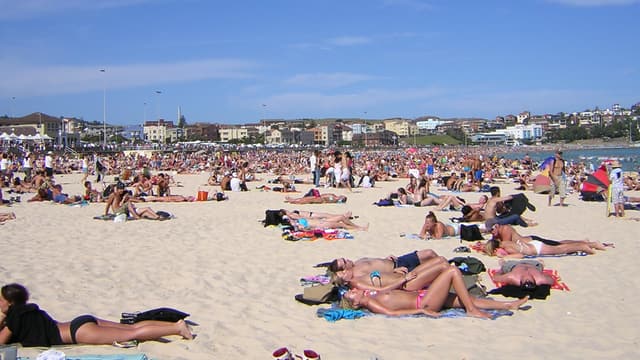
On a December evening you can still be sitting on the beach in Hobart at 8:45 pm with the sun up, while in Darwin it went down before 7:15 pm. In Brisbane the sun is up before 5 am in early summer, an hour earlier by the clock than in Sydney. Australia is a big, wide country squeezed into a handful of time zones, and the sun doesn't care about any of them. Here is why times vary so much, and how daylight saving shifts them.
Why sunrise and sunset times differ across Australia
Three things set the clock time of sunrise and sunset in any town.
Latitude and the season
The further you are from the equator, the bigger the swing between summer and winter day length. Darwin, at about 12° south, has days between roughly 11 hours 24 minutes and 12 hours 52 minutes through the year. Hobart, at about 43° south, ranges from about 9 hours to more than 15 hours 20 minutes. Sydney and Perth sit in between.
The longest day of the year in Australia falls on the December solstice, at 7:50 am AEDT on 22 December 2026, and the shortest around the June solstice, 21 June.
Longitude within a time zone
Clock time is shared across a whole zone, but the sun rises progressively later as you go west. Australia has three standard time zones:
- Australian Western Standard Time (AWST), UTC+8: Western Australia
- Australian Central Standard Time (ACST), UTC+9:30: the Northern Territory, South Australia and Broken Hill
- Australian Eastern Standard Time (AEST), UTC+10: Queensland, NSW, the ACT, Victoria and Tasmania
The sun is highest in the sky at solar noon. In Brisbane, near the eastern edge of its zone, that happens before noon, between about 11:35 and 11:50 am, so the whole day is shifted early: sunrise in early December is about 4:44 am. Darwin sits well to the west of the meridian its time zone is based on, so solar noon comes between about 12:35 and 12:50 pm and its evenings run late. Perth is a little west of its own zone's meridian, with solar noon between about 12:05 and 12:20 pm.
Daylight saving
The third factor is political rather than astronomical. In the states that observe daylight saving, every sunrise and sunset between October and April is an hour later by the clock. That is why Sydney's midsummer sunsets are after 8 pm while Brisbane's, at a similar longitude, are before 7 pm.
Sunrise and sunset in December and June: Perth, Sydney, Hobart and Darwin
These are the times around each solstice in 2026, in local clock time. Summer times include daylight saving in Sydney, Melbourne and Hobart.
| City | Sunrise, 22 Dec | Sunset, 22 Dec | Daylight | Sunrise, 21 June | Sunset, 21 June | Daylight |
|---|---|---|---|---|---|---|
| Darwin | 6:19 am | 7:10 pm | 12 h 52 min | 7:06 am | 6:30 pm | 11 h 24 min |
| Brisbane | 4:49 am | 6:42 pm | 13 h 53 min | 6:37 am | 5:01 pm | 10 h 24 min |
| Perth | 5:07 am | 7:22 pm | 14 h 15 min | 7:16 am | 5:20 pm | 10 h 3 min |
| Sydney | 5:41 am | 8:05 pm | 14 h 25 min | 6:59 am | 4:53 pm | 9 h 54 min |
| Melbourne | 5:54 am | 8:42 pm | 14 h 47 min | 7:35 am | 5:08 pm | 9 h 32 min |
| Hobart | 5:28 am | 8:49 pm | 15 h 21 min | 7:41 am | 4:42 pm | 9 h 1 min |
A few things stand out. Hobart's summer day is two and a half hours longer than Darwin's, yet in June it gets nearly two and a half hours less. Melbourne's winter sunrise, at 7:35 am, is noticeably later than Sydney's because Melbourne sits further west in the same time zone and further south. And Darwin barely changes: its sunset moves by less than an hour across the whole year.
For today's times in your own town, the Perth forecast, the Sydney forecast, the Hobart forecast and the Darwin forecast all show sunrise and sunset at the top of the page.
The longest and shortest days are not the earliest and latest sunrises
The solstice gives the longest day, but not the earliest sunrise or the latest sunset. Because of the tilt and the elliptical shape of Earth's orbit, solar noon drifts a few minutes later through December. The result:
- Sydney's earliest sunrise, about 5:36 am, comes in the first half of December, two weeks before the solstice.
- Perth's sunrise sits at about 5:03 am through the first half of December.
- Hobart's latest sunset, about 8:52 pm, arrives around New Year, after the solstice.
- In winter it runs the other way: Hobart's earliest sunsets, around 4:42 pm, come before 21 June, while its latest sunrises, about 7:42 am, come at the end of June.
If you're an early riser chasing a summer dawn swim, early December is your best bet. If you want long evenings, the week after Christmas wins.
First light and last light: civil twilight explained
Sunrise and sunset mark the moment the top edge of the sun touches the horizon. But it is light enough to walk, surf or drive without headlights well before sunrise and after sunset. That period is civil twilight. Geoscience Australia defines its start and end as the moment the centre of the sun is 6° below the horizon, when large objects can be seen but no detail.
Twilight lasts longer the further south you go, because the sun meets the horizon at a shallower angle:
| City, 22 December 2026 | First light | Sunrise | Sunset | Last light |
|---|---|---|---|---|
| Darwin | 5:55 am | 6:19 am | 7:10 pm | 7:34 pm |
| Perth | 4:39 am | 5:07 am | 7:22 pm | 7:50 pm |
| Hobart | 4:53 am | 5:28 am | 8:49 pm | 9:24 pm |
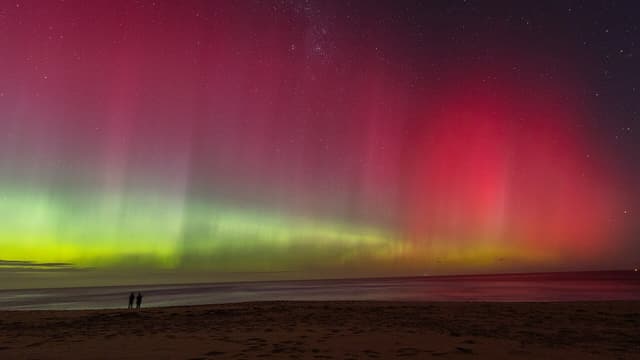
In the Top End twilight is quick, about 24 minutes. In Hobart in summer it stretches to about 35 minutes, and the sky can keep a glow well after 9:30 pm. Fishers, photographers and anyone planning a bushwalk should work to first and last light, not sunrise and sunset. Further darkness comes in stages: nautical twilight at 12° and astronomical twilight at 18° below the horizon, after which the sky is fully dark, which matters if you are hoping to see the aurora australis.
Daylight saving in Australia: who changes and when
Daylight saving runs from the first Sunday in October to the first Sunday in April in New South Wales, Victoria, South Australia, Tasmania and the ACT. Queensland, Western Australia and the Northern Territory do not observe it.
For the current season, according to the NSW Government:
- Started: Sunday 4 October 2026 at 2 am standard time, when clocks moved forward to 3 am
- Ends: Sunday 4 April 2027 at 3 am daylight time, when clocks go back to 2 am
During daylight saving, the mainland runs on five different clock times at once:
| Time zone in summer | UTC offset | Where |
|---|---|---|
| AWST | +8 | Western Australia |
| ACST | +9:30 | Northern Territory |
| ACDT | +10:30 | South Australia, Broken Hill |
| AEST | +10 | Queensland |
| AEDT | +11 | NSW, ACT, Victoria, Tasmania |
So in summer Sydney is three hours ahead of Perth and an hour ahead of Brisbane, and Adelaide is an hour ahead of Darwin. On the Queensland and NSW border, Coolangatta and Tweed Heads sit side by side an hour apart. Phones change automatically; car clocks, ovens and the old wall clock in the shed still need a hand.
Sunrise and sunset times on this site
Every forecast page on this site shows the day's sunrise and sunset times in the town's own local time, with daylight saving applied where it is in force. The Brisbane forecast and the Melbourne 14-day forecast are good examples, and tomorrow's weather across the country is a quick way to check the outlook for an early start.
Longer days also mean more hours of strong sun. Our UV index page gives the daily sun protection times for each town, and the guide to the UV index in Australia explains why UV can be extreme even on a mild day. To see how day length fits into the wider pattern of the year, read our guide to the seasons in Australia.
Common questions
What time is sunset today?
It depends on your town and the date. Open the forecast page for your town on this site: it shows today's sunrise and sunset in local time, including daylight saving where it applies, and the 14-day page lets you look ahead. As a guide, in late November sunset is around 7:45 pm in Sydney, 8:20 pm in Melbourne and just after 7 pm in Perth.
When does daylight saving end in 2027?
Daylight saving ends at 3 am daylight time on Sunday 4 April 2027 in New South Wales, Victoria, South Australia, Tasmania and the ACT. Clocks go back one hour to 2 am, so you get an extra hour of sleep and mornings get lighter. Queensland, Western Australia and the Northern Territory don't change.
Do the clocks go forward or back in October?
Forward. On the first Sunday in October, clocks in daylight saving states jump from 2 am to 3 am standard time, so you lose an hour of sleep and gain an hour of evening light. In April they go back again. A simple way to remember it: spring forward, fall back.
What is the time difference between Sydney and Perth?
Two hours for most of the year and three hours during daylight saving. Perth stays on Australian Western Standard Time (UTC+8) all year, while Sydney moves from UTC+10 to UTC+11 between the first Sunday in October and the first Sunday in April.
What is the difference between sunrise and first light?
First light is the start of morning civil twilight, when the centre of the sun is 6 degrees below the horizon and there is enough light to see large objects outdoors. Sunrise is the moment the top edge of the sun appears on the horizon. In Australian cities the gap is usually 25 to 35 minutes.
Which Australian capital has the longest day?
Hobart, the southernmost capital. Around the December solstice it gets more than 15 hours 20 minutes of daylight, about an hour more than Sydney and two and a half hours more than Darwin. The trade-off comes in June, when Hobart has only about 9 hours of daylight.